Beyond looking beautiful, a spa is a tool for relaxation and recovery. Hydrotherapy, the use of warm water, buoyancy, and massage jets, is the reason a soak feels so restorative after a long day or a hard workout. Understanding the basics helps you design a spa that feels as good as it looks. Here is how it works and what to consider.
How hydrotherapy works
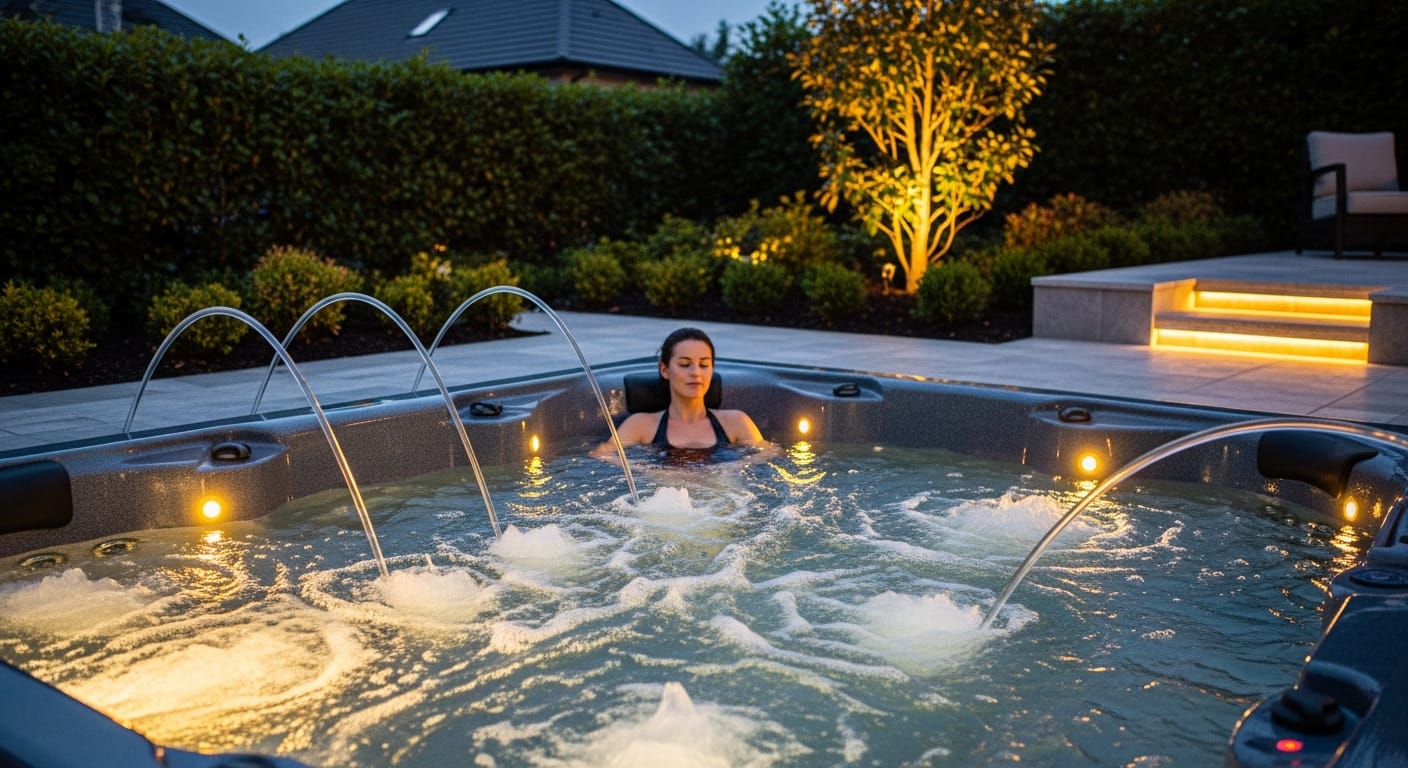
Hydrotherapy combines three elements: heat, buoyancy, and massage. Warm water helps muscles relax, buoyancy takes weight and pressure off joints, and targeted jets deliver a massaging pressure that many people find eases tension and supports recovery.
Together these create the deeply relaxing, soothing experience a good spa is known for. The warmth and the gentle resistance of moving water are what set a spa apart from simply sitting in a tub.
The relaxation and recovery people seek
Most people use a spa to unwind, relieve everyday muscle tension, and create a calming ritual at the end of the day. Many also value it after exercise, finding that warm water and jets help them feel looser and more comfortable.
There is a strong mental component too: the quiet, the warmth, and the routine of a soak provide a dedicated moment to decompress, which is part of why spas are so popular as a place to soak.
Jet design makes the difference
Not all spas feel the same, and jet placement is the reason. Thoughtful jet configuration targets the areas people care about most, with a mix of jet types and intensities and proper ergonomic seating so the massage lands where it should.
When we design a custom spa, we plan seating and jets around comfort and hydrotherapy, not just appearance, so the spa delivers a genuinely therapeutic experience rather than a generic one.
Ready to start your project?
Schedule a free on-site consultation and we will help you plan a pool built for your backyard and budget.
Get a Free Quote