The material under your feet defines how a patio or pool deck looks, feels, and holds up. In North Texas, where intense sun heats surfaces and clay soil moves with the seasons, that choice matters even more. The three most common options, pavers, travertine, and concrete, each have real strengths and tradeoffs. Here is how they compare so you can choose what fits your style, your budget, and the Texas climate.
Pavers: flexible, repairable, and varied
Concrete or stone pavers are individual units set over a prepared base. Their biggest advantage in our region is flexibility: because they are not a single rigid slab, they tolerate soil movement better and individual pavers can be lifted and reset if anything shifts or stains.
Pavers also come in a huge range of colors, shapes, and patterns, so they suit nearly any style from modern to traditional. The tradeoff is that joints can collect debris or weeds without proper sand and sealing, and a quality paver installation costs more than basic concrete.
Travertine: cool underfoot
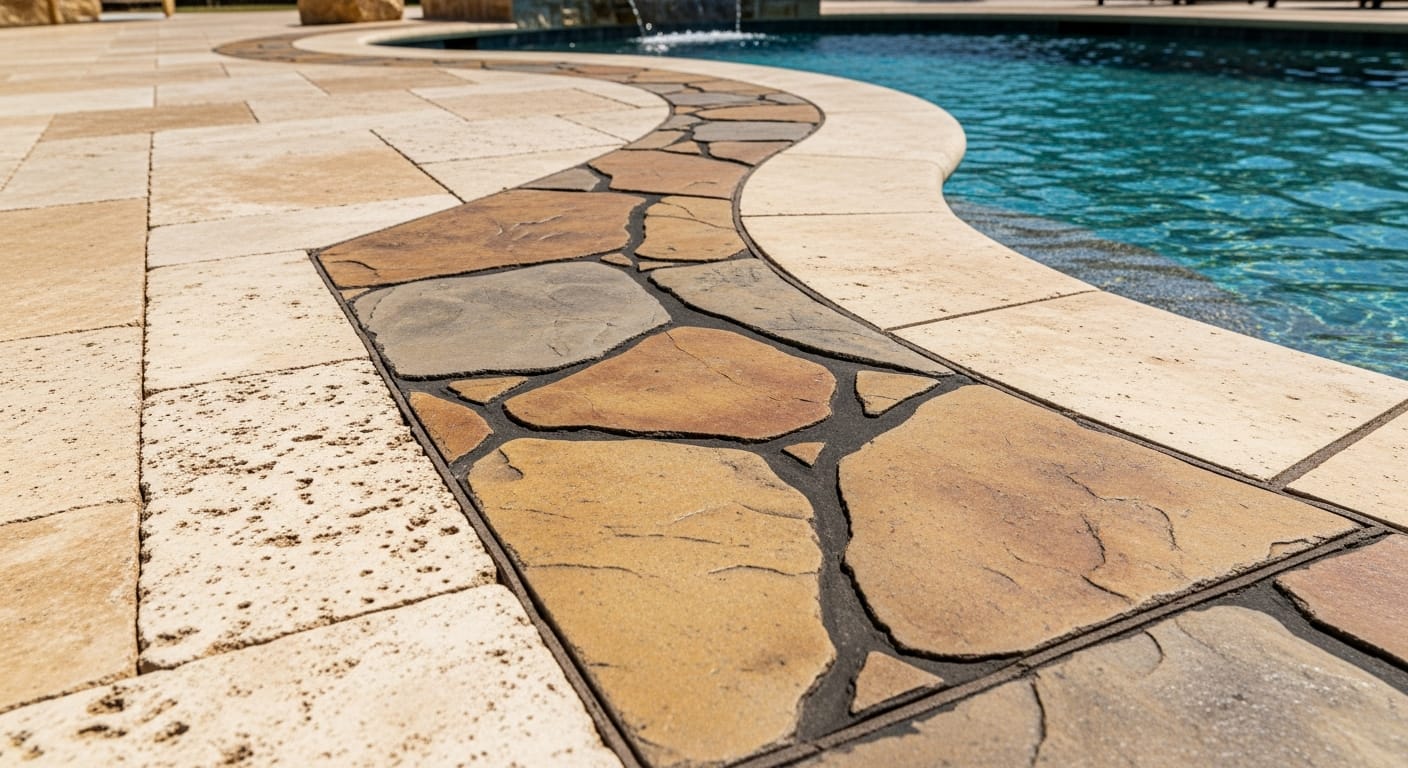
Travertine is a natural stone prized for pool decks because it stays noticeably cooler underfoot than concrete or many pavers, a real benefit when the sun has been beating down all day. Its natural, varied tones give a stone look that pairs with the pool.
It is naturally slip-resistant when finished correctly and very durable. The considerations are cost, and the need for periodic sealing to protect the stone in our climate.
Concrete: affordable and versatile
Poured concrete is the most budget-friendly base option and is far more versatile than people expect. Stamped, stained, and broom finishes can mimic stone, brick, or tile and create a cohesive look across a large area at a lower cost than pavers or travertine.
The main drawback in North Texas is cracking. Because concrete is a rigid slab, our expansive clay soils can cause cracks over time, though proper preparation, reinforcement, and control joints minimize this. Concrete can also run hot underfoot, so lighter colors and finishes help around a pool.
Choosing the right material for your backyard
There is no single material for every yard, only a good fit for your priorities. If you want maximum design flexibility and easy repairs, pavers are excellent. If cool stone around the pool is the goal, travertine is a strong choice. If budget and broad coverage matter most, finished concrete delivers.
Many of our projects combine materials, such as travertine right around the pool with stamped concrete or pavers for the larger patio. We will help you balance look, comfort, durability, and budget during a free consultation and recommend the right mix for your space.
Ready to start your project?
Schedule a free on-site consultation and we will help you plan a pool built for your backyard and budget.
Get a Free Quote