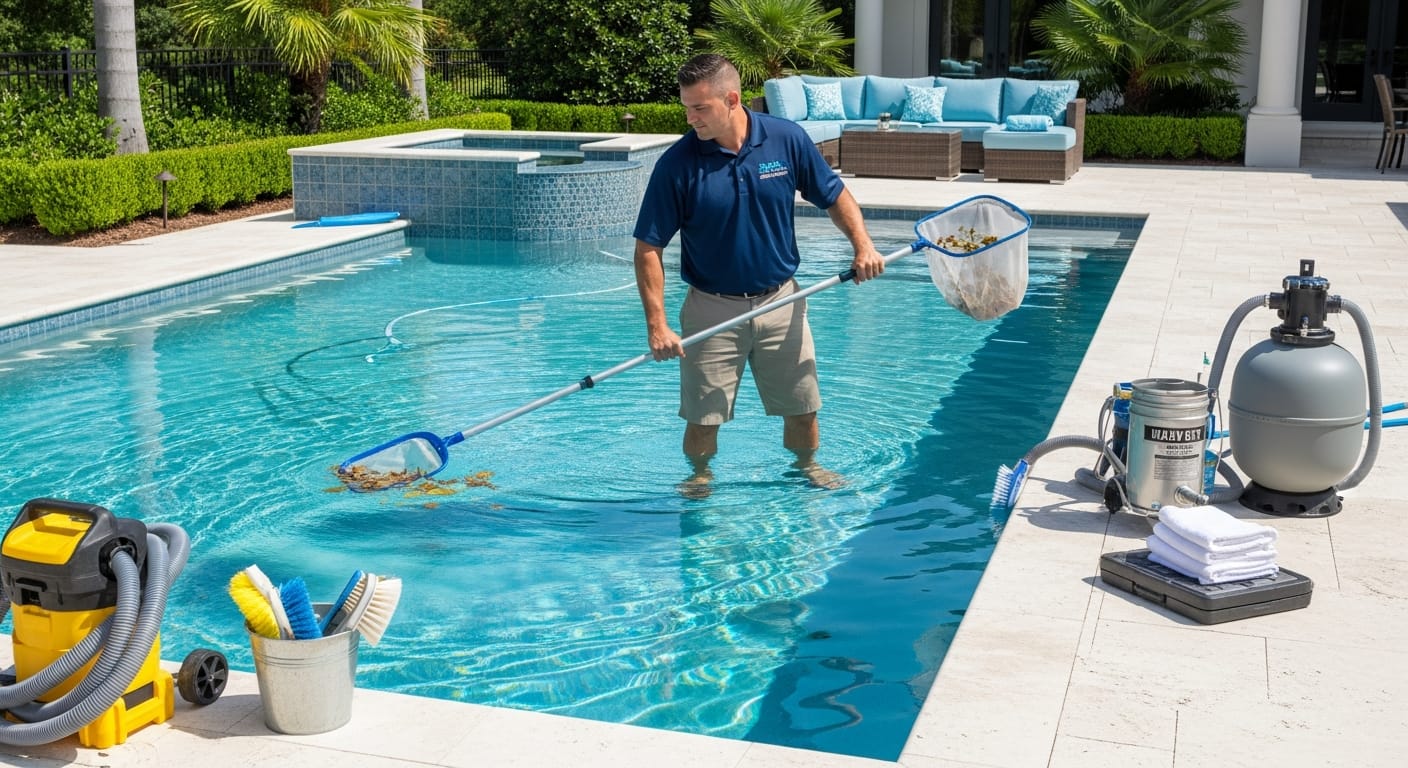

Behind every clear, inviting pool is balanced water chemistry. It can seem intimidating, but the core ideas are simple, and understanding them helps you keep your pool healthy whether you maintain it yourself or work with a service. Here is a homeowner-friendly primer on the basics that matter most.
Sanitizer: chlorine and salt
Sanitizer is what keeps your water safe by killing bacteria and algae. Most pools use chlorine, either added directly or generated automatically by a saltwater system. Keeping sanitizer at the right level at all times is the single most important part of pool chemistry.
In the hot North Texas sun, chlorine burns off quickly, and heavy use adds contaminants, so sanitizer demand is highest in summer. A stabilizer helps protect chlorine from the sun, but levels still need regular checking.
pH and alkalinity
pH measures how acidic or basic your water is, and it needs to stay in a balanced range. Water that drifts too low becomes corrosive and can damage equipment and finishes, while water that drifts too high causes cloudiness and scale and makes chlorine less effective.
Total alkalinity acts as a buffer that keeps pH stable. When alkalinity is in range, pH is much easier to hold steady. Balancing these two together is the foundation of comfortable, equipment-friendly water.
Calcium hardness and stabilizer
Calcium hardness is the amount of calcium in the water. Too little can make water aggressive toward plaster and equipment, while too much leads to scaling and cloudy water. Keeping it balanced protects your finish.
Cyanuric acid, or stabilizer, shields chlorine from being destroyed by sunlight. The right amount makes your sanitizer last longer, but too much can reduce its effectiveness, so it is part of the balance too.
Why balance matters and when to get help
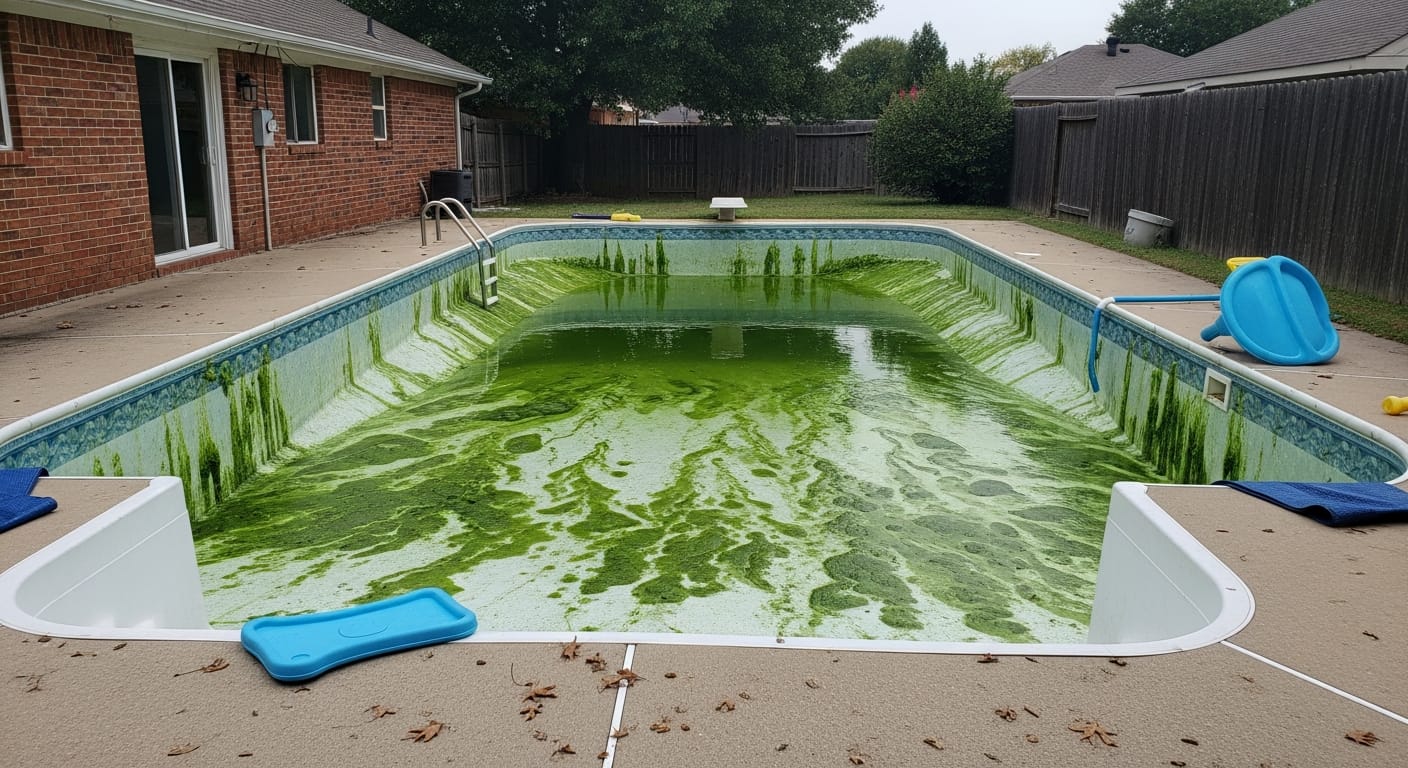
All of these levels work together. When they are balanced, water is clear, safe, comfortable, and gentle on your pool. When they drift, you get algae, cloudiness, irritation, scale, or corrosion, and the fixes get more expensive the longer they wait.
Chemistry can be managed yourself with regular testing and care, but many homeowners prefer to leave it to a professional who balances it precisely every week. If your water is persistently cloudy, green, or irritating, that is a sign to get expert help.