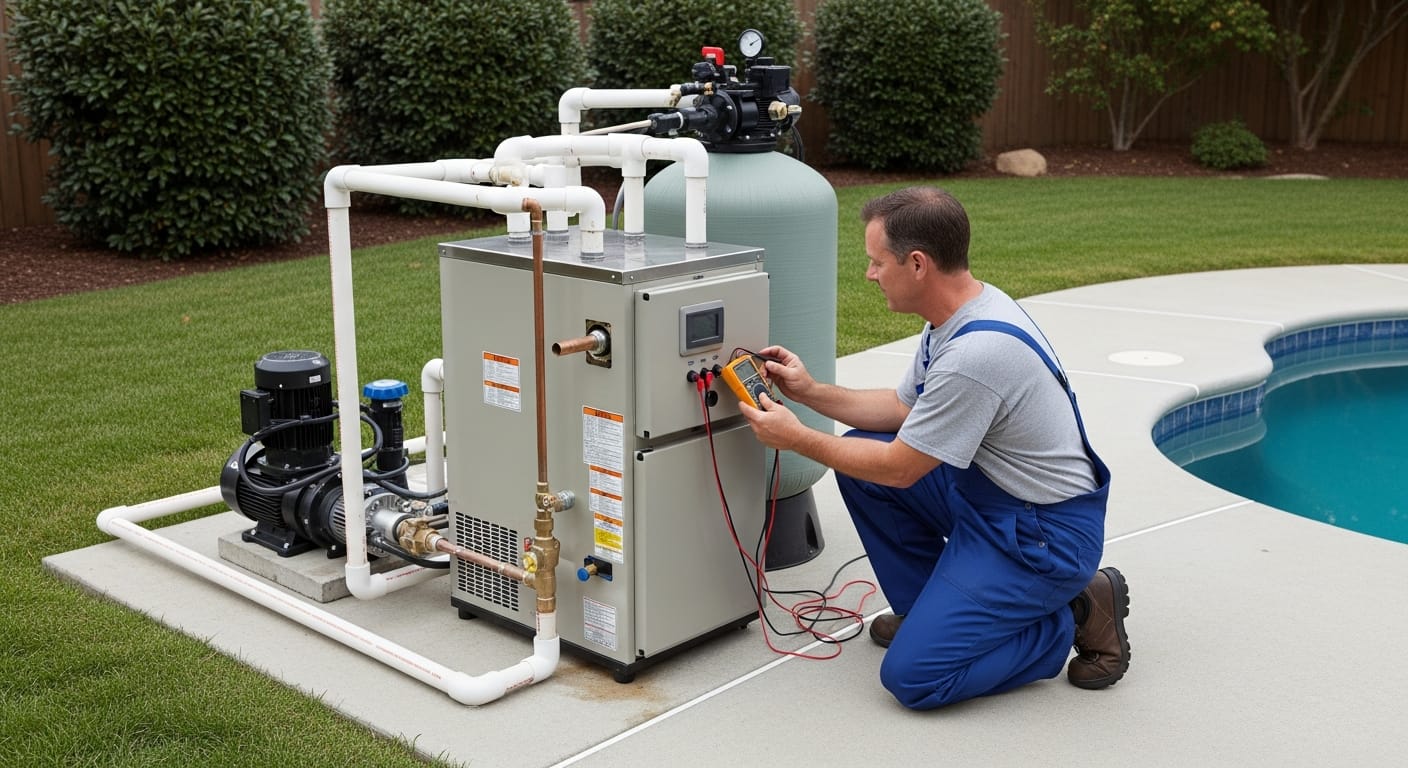
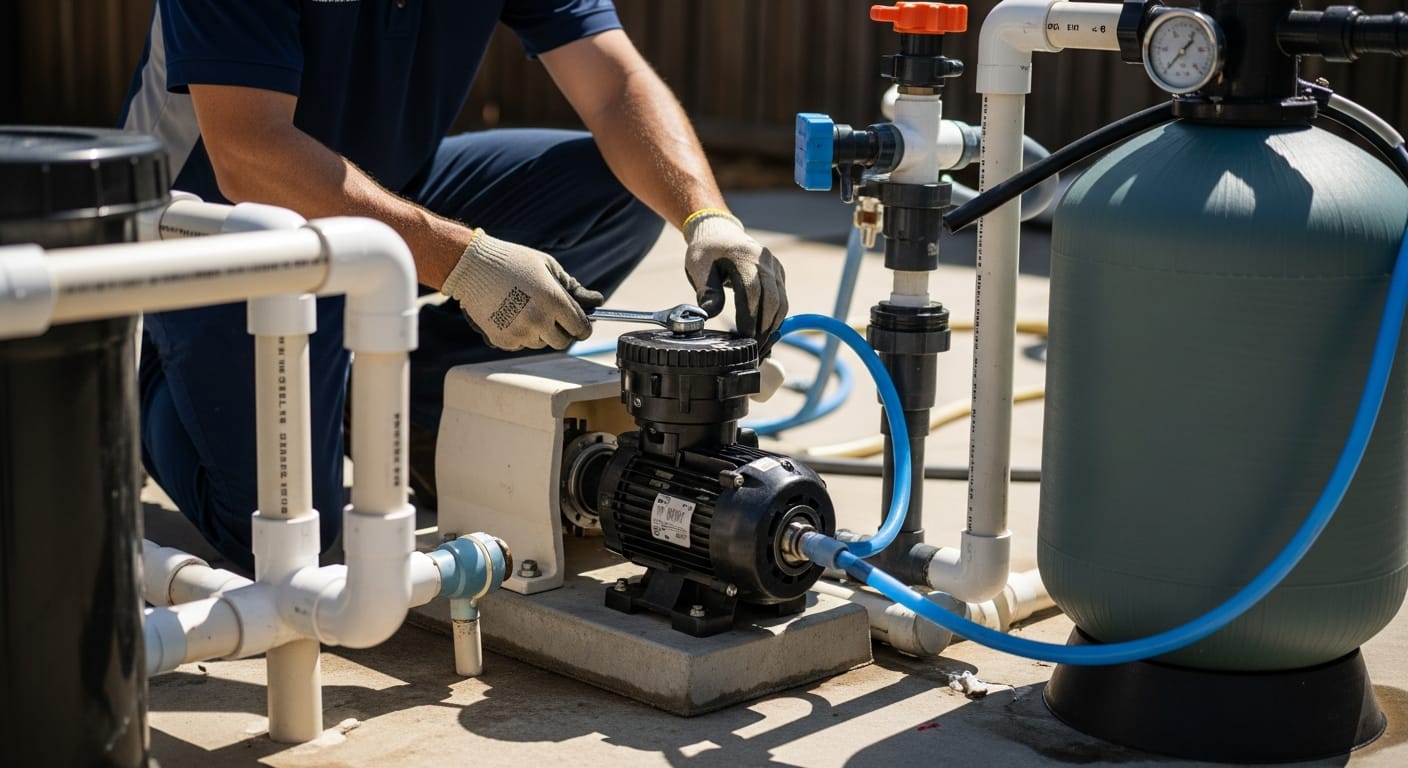
The pump is the heart of your pool. It circulates water through the filter and heater, and when it fails, everything else suffers. A failing pump can cloud your water, spike your energy bill, or stop circulation entirely. Here is how to recognize pump trouble, what causes it, and how to decide between repair and replacement.
Signs your pool pump is failing
Loud grinding or screeching, a pump that won't prime or hold water, leaking around the housing, or a motor that hums but won't start are all classic warning signs. So is a pump that keeps shutting itself off, which often points to overheating.
More subtle clues include weak circulation, water that won't stay clear, and a noticeable jump in your electric bill. Because the pump runs constantly, even a small efficiency problem shows up quickly in both water quality and cost.
What causes pump problems
Common culprits include worn bearings (the usual cause of a loud motor), a failed capacitor that prevents the motor from starting, leaking shaft seals, and a clogged impeller restricting flow. Air leaks on the suction side can also stop a pump from priming.
Age and run time matter too. Pumps work hard in the Texas heat, and older single-speed motors simply wear out. Sometimes the fix is a single part; other times the motor itself has reached the end of its life.
Repair or replace?
Many pump problems are genuinely repairable, such as replacing a capacitor, bearings, or seals at a fraction of the cost of a new pump. If the pump is relatively new and the rest of it is sound, a targeted repair is usually the smart choice.
If the pump is old, the motor is failing, or you are still running a single-speed pump, replacement often makes more sense, especially given the energy savings of a modern variable-speed pump. We give honest guidance on which path actually saves you money.
Why variable-speed pumps pay off
Variable-speed pumps run at lower speeds for longer, using dramatically less electricity than older single-speed models. Because the pump is one of the biggest energy users at a pool, the savings can offset the cost of the upgrade over time.
When we diagnose a failing pump, we will tell you whether a repair or a variable-speed replacement is the better value for your situation, with clear pricing either way. Our goal is to get your pool circulating efficiently again, fast.
Need a Repair?
Call Lucent Pools at 817-339-6770. Fort Worth & DFW — diagnose on site; same day or next day when parts and schedule allow.