Coping is the cap that frames the top edge of your pool where the shell meets the deck. It does serious work, sealing the structure, directing splash-out away from the pool, and giving swimmers a comfortable place to grip and exit, but it is also a defining design element. Upgrading worn or dated coping is one of the highest-impact moves in a pool remodel. Here are the materials we use most in Dallas–Fort Worth and how to choose between them.
What coping does and why it matters
Coping caps the bond beam at the top of the pool shell and creates the transition to your decking. A good coping edge keeps water from seeping behind the shell, provides a non-slip surface to grab, and visually defines the pool's shape. When coping is cracked, stained, or hollow-sounding, it is both an eyesore and a sign that water may be getting where it should not.
Because coping sits at eye level around the entire pool, the material and edge profile you choose set the tone for the whole backyard. It is worth choosing something that complements your home's architecture and your decking.
Travertine and natural stone
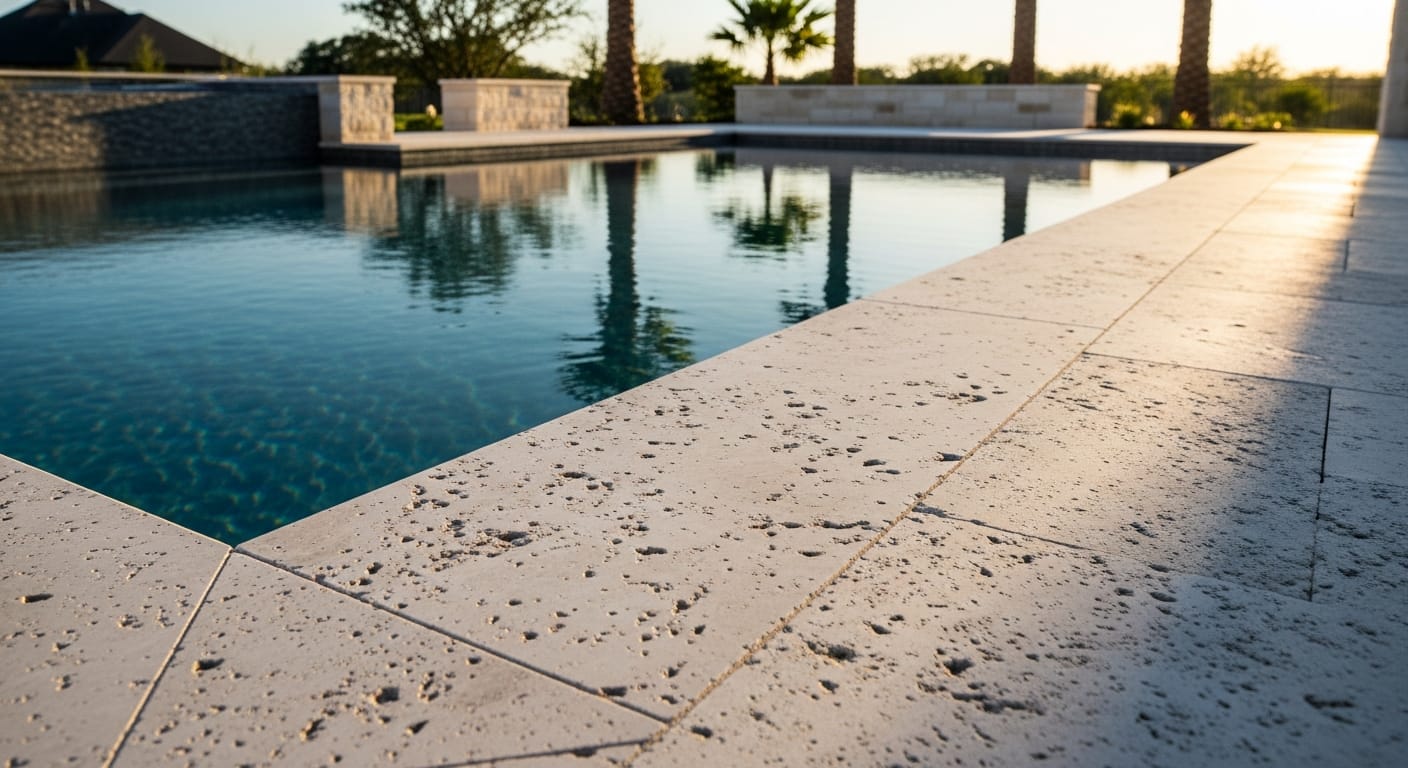
Travertine is the most requested coping material for DFW pools, and for good reason. It stays remarkably cool underfoot in our brutal summers, has a soft natural texture that resists slipping, and has a natural look. It pairs beautifully with matching travertine decking for a seamless look.
Other natural stones such as limestone, flagstone, and granite offer their own character, from rustic to refined. Natural stone costs more, but it is durable, and it often becomes the feature people remember about a backyard.
Concrete coping: poured-in-place and precast
Cantilevered (poured-in-place) concrete coping creates a clean, modern edge that flows directly into the deck with a smooth, contemporary profile. It is cost-effective, highly customizable in shape, and popular for sleek geometric pools.
Precast concrete coping comes in pre-formed units with a consistent shape and a range of colors and textures, including bullnose profiles with a rounded, comfortable edge. It offers a clean look at a friendly price point and installs efficiently, which keeps remodel timelines tight.
Edge profiles and choosing for your remodel
Bullnose (rounded) edges are the most comfortable to grip and sit on and are a favorite for families. Square or chiseled edges read more modern or more rustic depending on the material. The right profile balances comfort, safety, and the style you are going for.
During a remodel we look at how your coping, tile, and decking work together as a system, because replacing all three at once produces the most dramatic transformation and ensures everything ages evenly. We will help you weigh cost, comfort, and longevity for your specific backyard.
Ready to start your project?
Schedule a free on-site consultation and we will help you plan a pool built for your backyard and budget.
Get a Free Quote