Tile is the jewelry of a swimming pool. It is the first thing you notice at the waterline, the detail that makes a pool feel custom instead of generic, and one of the most cost-effective ways to transform a tired pool during a remodel. If your existing tile is cracked, calcium-stained, or simply dated, replacing it can make the whole backyard feel new again. Here is how to choose the right pool tile for your Dallas–Fort Worth home.
Where tile goes in a pool
Most pools use tile along the waterline, the band that runs around the perimeter at the surface of the water. Waterline tile takes the most abuse from sun, splashing, and the calcium and minerals in North Texas water, so it is both decorative and protective. A fresh waterline tile band is the single most noticeable upgrade in a remodel.
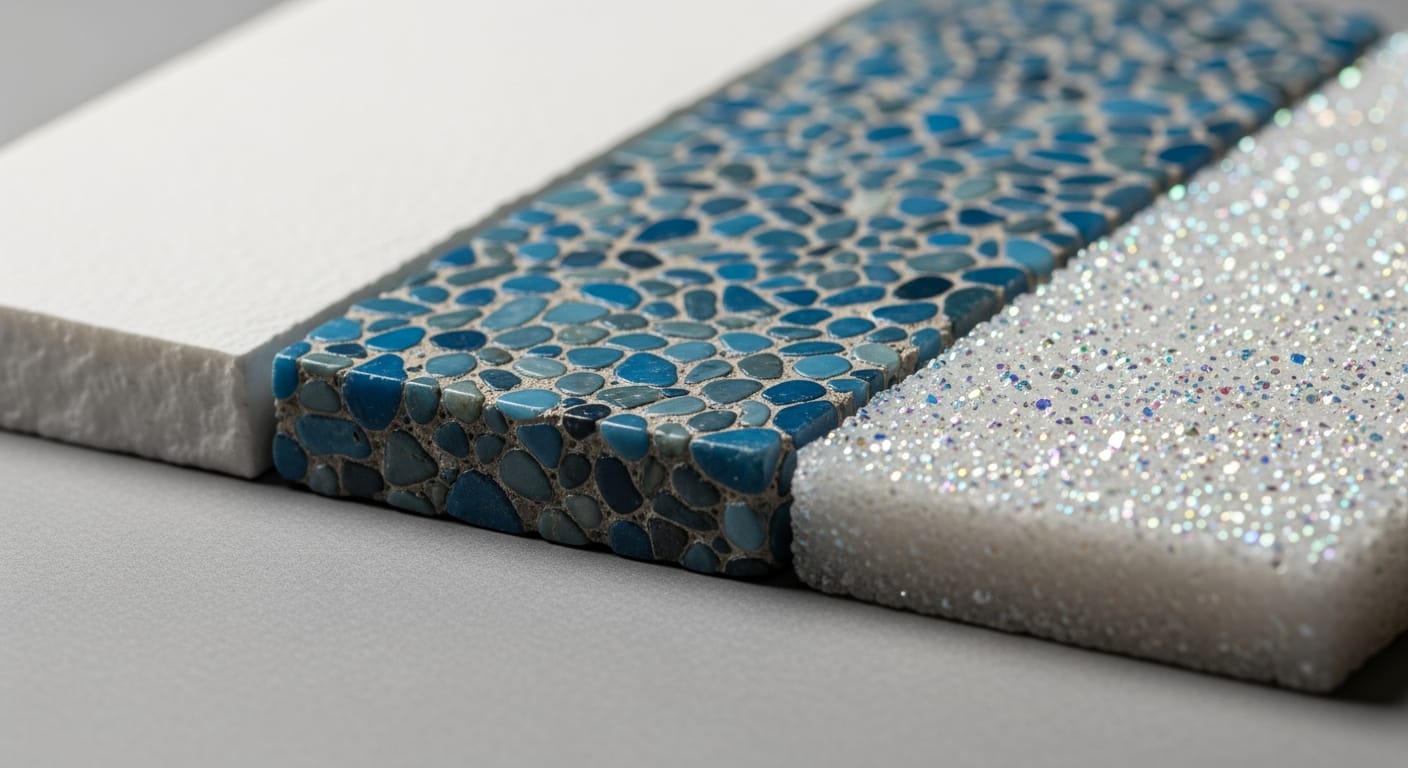
Beyond the waterline, tile can accent steps, benches, spa spillways, and tanning ledges, and some pools are fully tiled from the waterline to the floor for a deep, jewel-like color. Fully tiled pools cost considerably more than a plaster or pebble interior with a tile band, so most homeowners reserve all-tile finishes for spas and signature features.
Porcelain and ceramic tile
Porcelain and ceramic tiles are the most popular and budget-friendly option for waterline bands. They come in an enormous range of colors, patterns, and finishes, including styles that mimic natural stone or hand-painted Mediterranean designs. Porcelain is dense and frost-resistant, which matters during the occasional hard North Texas freeze.
These tiles are durable, easy to clean, and forgiving on the budget, which makes them the default choice for most remodels. If you want a classic look without a higher price, a quality porcelain waterline tile is hard to beat.
Glass tile and mosaics
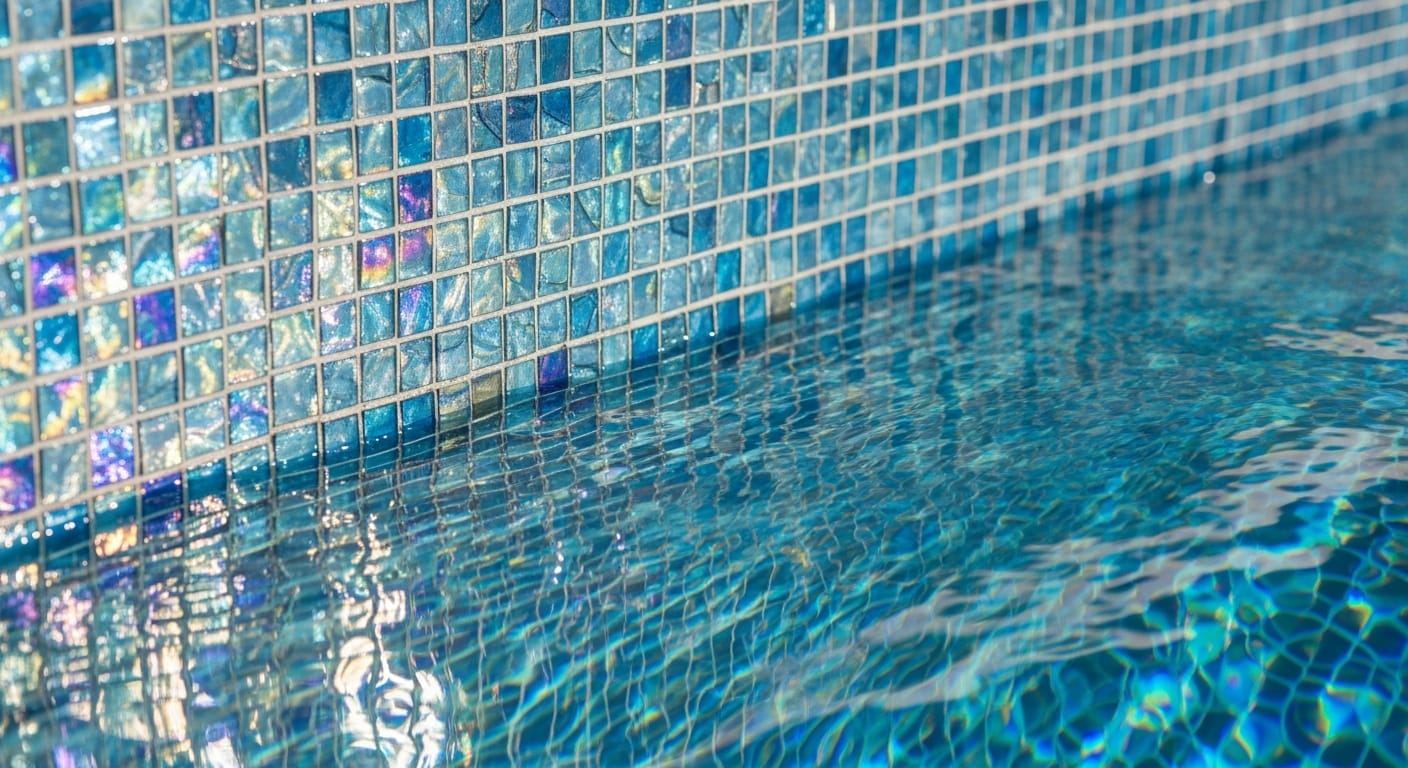
Glass tile costs more. It is non-porous, resists staining and chemicals, and has a luminous depth that catches and reflects light in a way ceramic cannot. Glass mosaics in blues, greens, and iridescent blends make the water look richer and more inviting, and they are exceptionally long-lasting.
The trade-off is cost: glass tile and intricate mosaics carry a higher material and installation price because they require skilled setting and specialized thinset. Many homeowners compromise beautifully by using glass tile as an accent on steps, spa walls, or a single feature wall while running a more affordable porcelain around the main waterline.
Choosing color and style for North Texas
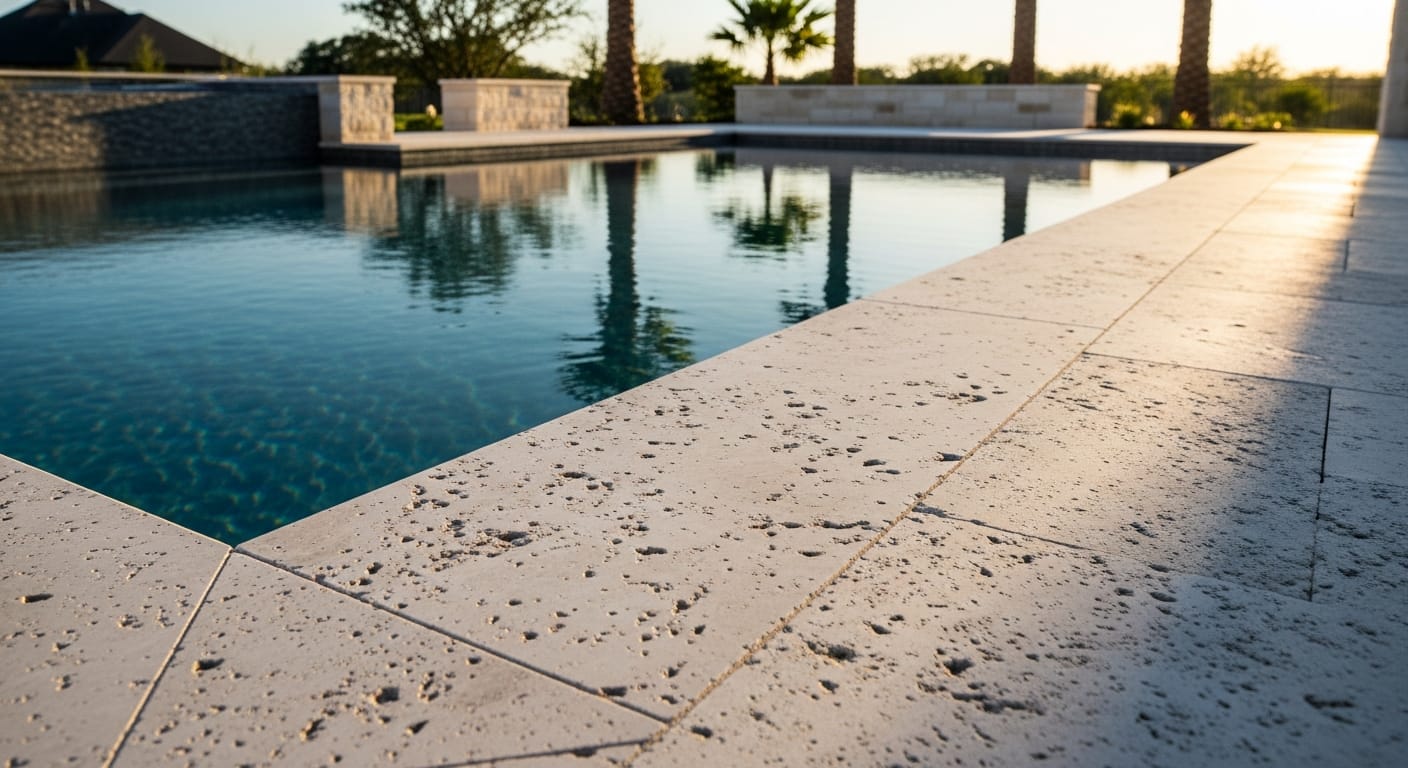
Tile color influences how your water reads. Cooler blues and greens deepen the perceived water color, while neutral stone tones create a more natural, lagoon-like feel that pairs well with travertine decking. It helps to view samples outdoors, wet, and against your actual decking and coping rather than under store lighting.
Because DFW water tends to be hard, we recommend tile and grout that resist calcium scaling, plus a maintenance routine that keeps the waterline clean. During your remodel we will show you samples in your own backyard light so the finished look is exactly what you expected.
Ready to start your project?
Schedule a free on-site consultation and we will help you plan a pool built for your backyard and budget.
Get a Free Quote